
Butternut squash delivers eight easy ways to bring warmth and flavor to your table, from classic soups and roasted sides to creative mains and even a surprise dessert. This sweet, nutty winter squash has become one of the most-searched ingredients in Canadian kitchens, and for good reason: it transforms into comfort food that’s both healthy and remarkably simple to prepare. Whether you’re meal-prepping for busy weeknights or planning a cozy weekend dinner, these recipes prove you don’t need elaborate techniques or long ingredient lists to make butternut squash shine.
The magic of butternut squash lies in its versatility. Roasted cubes become the foundation for grain bowls and salads. Pureed, it creates silky soups and sauces. Spiralized or sliced, it stands in as a vegetable main. And because it pairs naturally with warm spices, herbs, and a touch of maple syrup, you can move seamlessly from savory to sweet applications. Each recipe here offers a distinct approach, from weeknight-simple preparations that take just 10 minutes of active work to more involved dishes that make impressive centerpieces. You’ll find options for every skill level and occasion, all designed to help you make the most of this winter squash season and beyond.
Why Butternut Squash Deserves a Place in Your Kitchen
Butternut squash has earned its reputation as a kitchen workhorse for good reason. This winter squash offers a combination of nutritional value, ease of preparation, and recipe versatility that few ingredients can match. The butternut squash nutrition profile impresses with high levels of vitamin A, fiber, and antioxidants, making it a smart choice for health-conscious cooks. Its naturally creamy texture and subtle sweetness make it a particularly good match for artisanal ingredients like maple syrup, which explains why butternut squash recipes consistently rank among Canada’s most-searched food terms.
When selecting the eight recipes in this collection, we focused on several key criteria:
- Nutrient-dense and health-conscious, offering comfort food that actually nourishes
- Simple preparation with minimal active cooking time, perfect for busy families
- Natural sweetness that beautifully complements maple syrup’s complex flavor notes
- Year-round availability and appeal, not just a fall ingredient
- True versatility across dish types, from savory mains to unexpected desserts
This versatility is what makes butternut squash genuinely exciting. Unlike ingredients that shine in only one application, butternut squash moves seamlessly from simple roasted sides to creamy soups, hearty main dishes, fresh salads, and even creative desserts. Its mild, slightly sweet flavor means it can pair with maple syrup in ways that enhance both ingredients. The squash provides earthy depth while maple adds caramelized complexity, creating dishes that taste indulgent while remaining wholesome.
1. Classic Roasted Butternut Squash with Maple Glaze
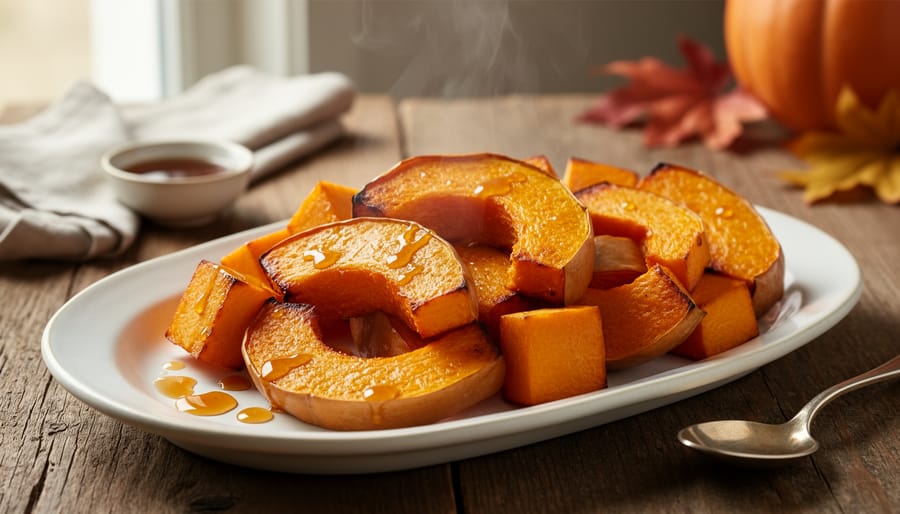
Start with the simplest approach. Roasting butternut squash transforms this unassuming vegetable into something remarkable with minimal effort. You need just four ingredients: one medium butternut squash (about 2-3 pounds), salt, pepper, and olive oil. That’s it.
Peel the squash and cut it into 1-inch cubes. A Y-shaped vegetable peeler makes quick work of the tough skin. For the cube-cutting, first slice off both ends to create stable surfaces, stand the squash upright, and work your knife down in sections. Remove the seeds from the bulbous bottom portion. Toss the cubes with 2 tablespoons olive oil, half a teaspoon of salt, and a quarter teaspoon of freshly ground pepper.
Spread everything in a single layer on a rimmed baking sheet. Don’t crowd the pan or you’ll get steamed squash instead of golden, caramelized pieces. Roast at 425°F for 25-30 minutes, flipping once halfway through. You’re looking for tender centers and brown, slightly crispy edges.
The maple glaze takes this basic preparation somewhere special. While the squash roasts, warm 3 tablespoons pure maple syrup in a small saucepan over medium heat until it reduces slightly and thickens, about 3-4 minutes. Drizzle it over the hot roasted squash straight from the oven. The natural sugars caramelize beautifully against those browned edges.
This roasted squash becomes the foundation for countless meals. Toss it into grain bowls with farro and greens. Layer it into a creamy maple-bacon soup for extra texture. Scatter it over salads with goat cheese and pecans. Or simply serve it as a side dish that disappears faster than you’d expect from something so straightforward.
The 10 minutes of active prep pays off all week when you’ve got perfectly roasted squash ready to go.
2. Creamy Butternut Squash Soup
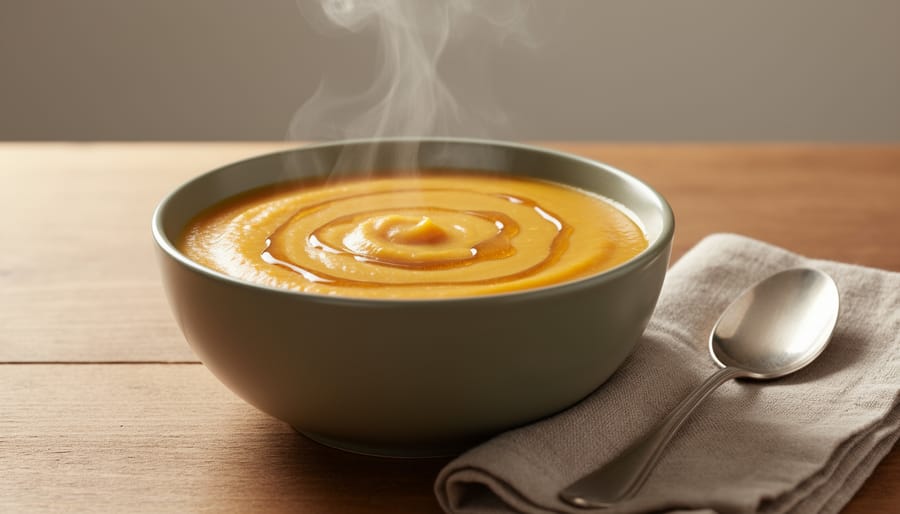
Butternut squash soup delivers comfort in a bowl while packing serious nutritional value. The squash base provides vitamins A and C, fiber, and natural sweetness without needing cream-heavy ingredients. This recipe lets the vegetable shine through a simple preparation that takes about 45 minutes start to finish.
Start by roasting 4 cups of cubed butternut squash with olive oil, salt, and pepper at 400°F for 25 minutes until caramelized. Sauté diced onion and minced garlic in a large pot, then add the roasted squash, 4 cups of vegetable stock, and a tablespoon of maple syrup. The maple adds subtle sweetness that rounds out the earthy squash flavor without making the soup dessert-like. Simmer for 15 minutes, then blend until silky smooth using an immersion blender or regular blender in batches.
The real advantage here is meal prep flexibility. This soup freezes beautifully for up to three months. Pour cooled soup into freezer-safe containers, leaving an inch of headspace for expansion. When you need a quick lunch or dinner, thaw overnight in the fridge or reheat directly from frozen on the stovetop, stirring occasionally.
Garnish options transform each serving. Try toasted pumpkin seeds for crunch, a drizzle of extra maple syrup, fresh sage leaves, or a swirl of Greek yogurt. Kids typically love the naturally sweet flavor, making this an easy weeknight winner that sneaks vegetables into dinner without complaints. The velvety texture appeals even to picky eaters who normally resist vegetable-forward dishes.
Make a double batch when squash is abundant and affordable. You’ll thank yourself when January arrives and you can pull restaurant-quality soup from your freezer in minutes.
3. Maple-Glazed Butternut Squash and Sausage Bowls
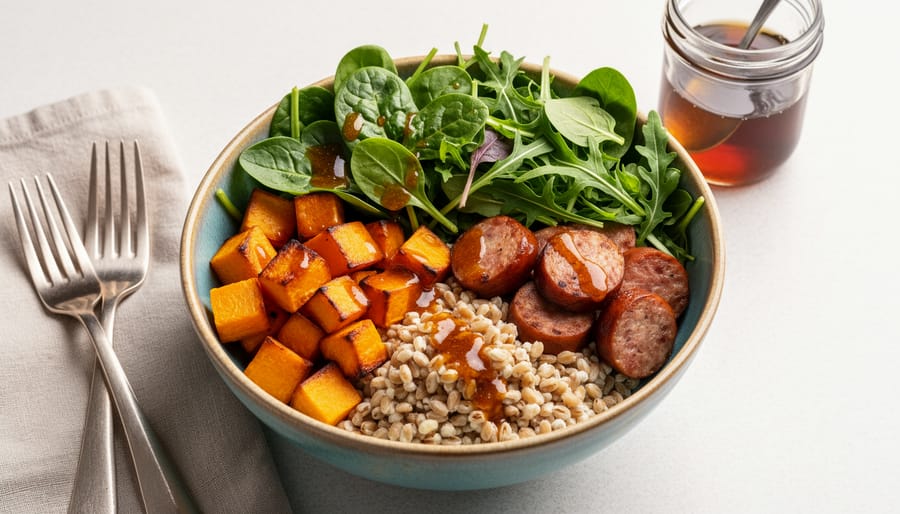
This is where butternut squash steps into dinner territory as the star of a satisfying, complete meal. Think of it as your shortcut to a restaurant-style bowl at home, except you control every ingredient and it takes less time than deciding where to order from.
Start with the base you know from recipe one: roasted butternut squash cubes tossed with salt, pepper, and olive oil, then roasted until golden. While those cook, brown your choice of sausage in a skillet, Italian, chicken apple, or even a plant-based version all work beautifully here. The key is getting those edges crispy so they contrast with the tender squash.
Now layer your bowl. Begin with a grain, farro holds up well, quinoa adds protein, or plain brown rice keeps things simple. Add a handful of fresh greens (arugula gives peppery bite, spinach stays mild), then arrange the roasted squash and sliced sausage on top. This is where maple syrup earns its place: whisk together two tablespoons with a tablespoon of olive oil, a teaspoon of Dijon mustard, and a splash of apple cider vinegar. Drizzle that over the whole bowl and suddenly everything clicks together, the sweet maple ties the savory sausage to the caramelized squash, while the vinegar cuts through the richness.
What makes this recipe shine is how flexible it is. Swap the grain, change the sausage, add roasted chickpeas for crunch, toss in dried cranberries if you want more sweetness. The formula stays the same: roasted squash plus protein plus grain plus greens, brought together with that maple dressing. You’ll have dinner on the table in 35 minutes, and it reheats so well you’ll want to make extra for tomorrow’s lunch. No soup pot required.
4. Butternut Squash and Sage Risotto with Maple Finish
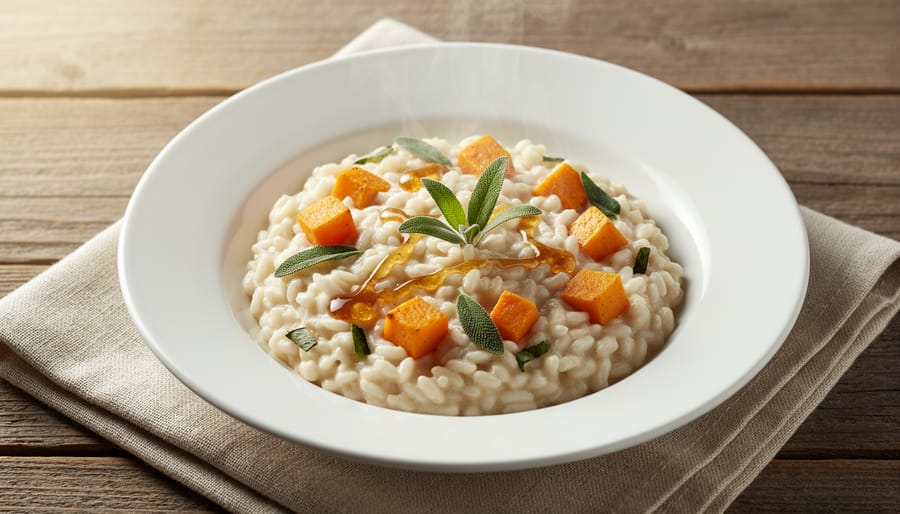
Risotto demands attention and patience, but butternut squash transforms this Italian staple into something special. The squash cubes soften as they cook, releasing natural sweetness that mingles with the creamy arborio rice, while fresh sage adds an earthy contrast. A final drizzle of maple syrup ties everything together, adding depth without turning the dish dessert-sweet.
Start by roasting 2 cups of butternut squash cubes (about 3/4-inch pieces) at 400°F for 20 minutes while you prep the other ingredients. This head start caramelizes the squash edges and concentrates its flavor. Meanwhile, heat 4 cups of vegetable or chicken stock in a separate pot and keep it simmering.
In a wide pan, sauté diced onion in butter until translucent, then add 1.5 cups arborio rice and toast for 2 minutes until the edges look translucent. Pour in 1/2 cup white wine, let it absorb, then begin adding warm stock one ladle at a time. Stir frequently and wait for each addition to absorb before adding the next. The constant stirring releases the rice’s starch, creating that signature creaminess.
After about 15 minutes, when the rice is nearly tender, fold in your roasted squash cubes and a handful of torn sage leaves. Continue adding stock until the rice reaches al dente texture with a loose, flowing consistency. The squash cubes hold their shape, providing pockets of sweetness and a tender bite that contrasts with the rice’s creaminess.
Remove from heat, stir in grated Parmesan and a knob of butter, then drizzle 2 tablespoons of maple syrup over the top. The maple deepens the squash’s natural flavor and adds a subtle gloss. Serve immediately, garnished with crispy sage leaves and extra Parmesan.
5. Stuffed Butternut Squash Halves with Quinoa and Cranberries
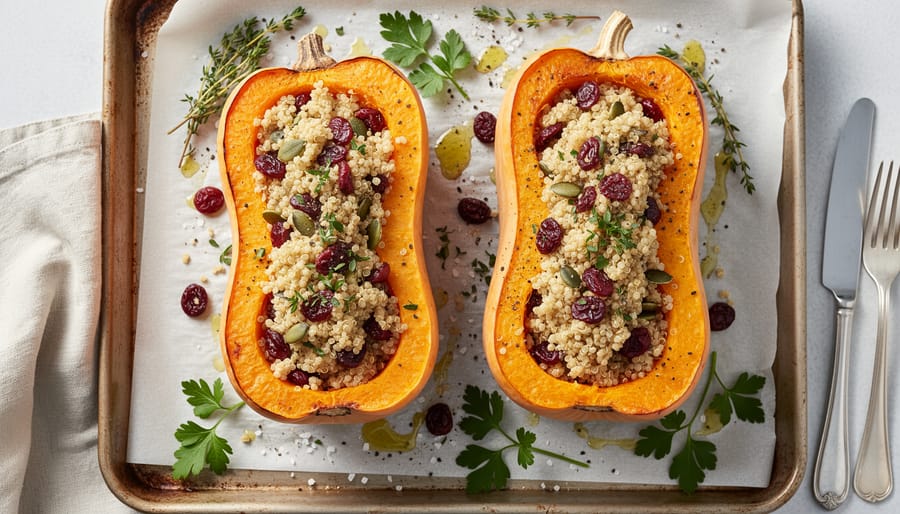
This show-stopping dish turns butternut squash halves into edible bowls filled with a colorful, nutritious stuffing that pleases both the eye and the palate. The natural sweetness of roasted squash pairs beautifully with earthy quinoa, tart cranberries, crunchy nuts, and a drizzle of maple syrup that ties everything together.
To make this recipe, slice a medium butternut squash in half lengthwise and scoop out the seeds. Brush the cut sides with olive oil, season with salt and pepper, and roast face-down at 400°F for about 35 minutes until tender. While the squash roasts, cook one cup of quinoa according to package directions and prepare your filling. Combine the cooked quinoa with dried cranberries, toasted pecans or walnuts, sautéed onions, fresh thyme, and a generous drizzle of maple syrup. The maple syrup not only adds sweetness but also helps the filling bind together and caramelize slightly when baked.
Flip the roasted squash halves over, fill them generously with the quinoa mixture, and return to the oven for another 15 minutes. The filling gets golden on top while the edges of the squash caramelize further, creating layers of texture and flavor.
This recipe shines as a vegetarian main course for two or can be quartered to serve four as a side dish. The visual presentation makes it perfect for holiday tables or dinner parties. Customize the filling based on what you have: swap cranberries for pomegranate seeds, use wild rice instead of quinoa, add crumbled goat cheese for richness, or toss in roasted chickpeas for extra protein. The sturdy squash halves hold their shape beautifully and can even be assembled a few hours ahead, then baked just before serving.
6. Butternut Squash Meatballs with Maple-Balsamic Glaze
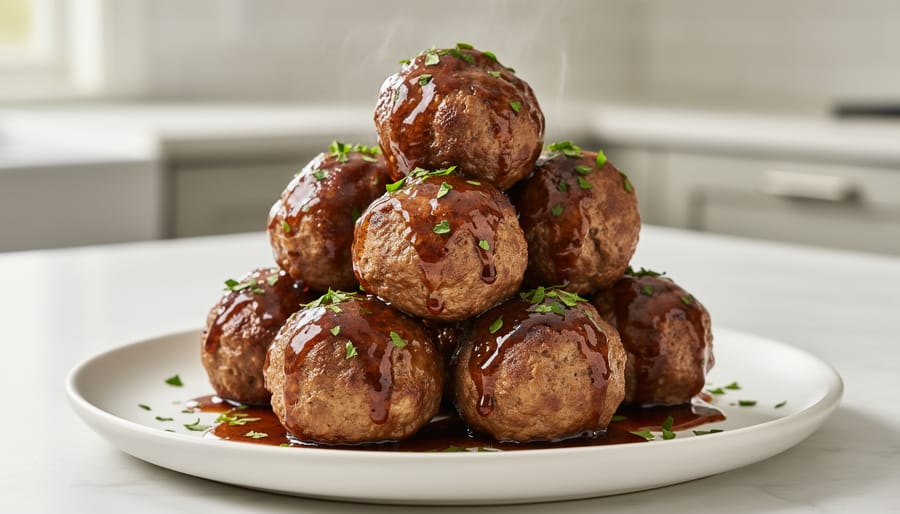
These meatballs solve a common parent challenge: sneaking vegetables into meals kids actually eat. Pureed butternut squash blends right into the meat mixture, adding moisture, nutrition, and a subtle sweetness that creates tender, flavorful meatballs your family won’t recognize as vegetable-packed.
Start with two cups of pureed roasted butternut squash (about half a medium squash, roasted until soft and blended smooth). Mix it with one pound of ground beef or turkey, one egg, half a cup of breadcrumbs, minced garlic, salt, and Italian seasoning. The squash replaces some of the fat and binding agents you’d normally need, resulting in lighter meatballs that stay moist through cooking. Shape into golf-ball-sized portions and bake at 400°F for 20 minutes, or pan-fry in olive oil if you prefer a crispy exterior.
While the meatballs cook, prepare the maple-balsamic glaze. Combine a quarter cup of maple syrup with three tablespoons of balsamic vinegar in a small saucepan. Simmer over medium heat for five minutes until it reduces to a thick, glossy consistency that coats the back of a spoon. The maple adds complexity beyond simple sweetness, balancing the vinegar’s tang with warm, earthy notes.
Toss the cooked meatballs in the warm glaze just before serving, coating each one evenly. They work beautifully over pasta, tucked into sub rolls, or served alongside roasted vegetables. The squash integration means each bite delivers vitamins A and C without compromising the familiar comfort of classic meatballs. This technique applies to other recipes too, opening the door to maple dessert inspiration where vegetables hide in sweet contexts.
7. Roasted Butternut Squash Salad with Maple Vinaigrette
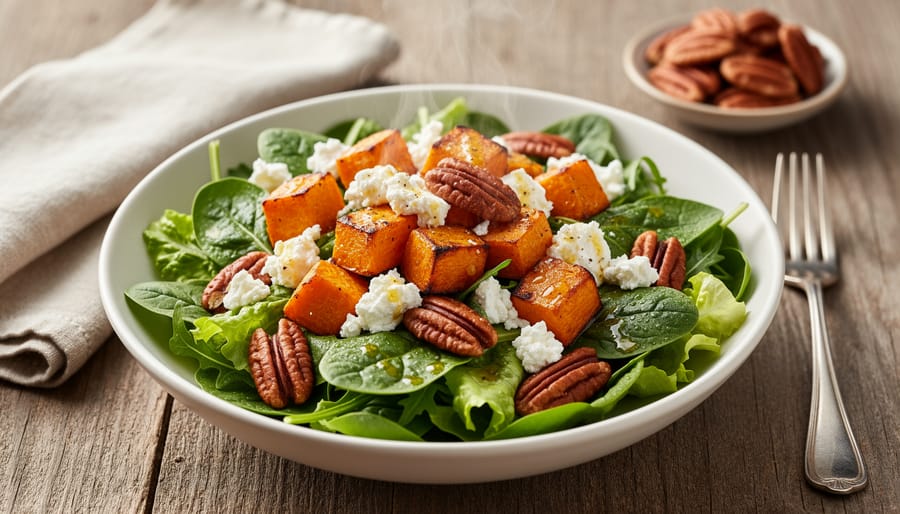
This salad transforms roasted butternut squash into something special. The sweetness of caramelized squash plays against tangy goat cheese and crunchy pecans, while the maple vinaigrette ties everything together. Best of all, you can roast the squash a day or two ahead and keep it refrigerated, making this an ideal choice for busy weeknights or last-minute entertaining.
Start with 3 cups of butternut squash cubes, tossed in olive oil and roasted at 400°F until golden brown and slightly crispy at the edges (about 25 minutes). Let them cool while you prepare the vinaigrette: whisk together 3 tablespoons olive oil, 1 tablespoon maple syrup, 2 tablespoons apple cider vinegar, 1 teaspoon Dijon mustard, and a pinch of salt. The maple syrup adds body and a gentle sweetness that complements the squash without overpowering it. If you store maple syrup properly in a cool place, it will maintain its flavor for months, ready whenever you need it for quick dressings like this one.
Assemble the salad on a bed of mixed greens or baby spinach. Scatter the roasted squash cubes over the greens, then add crumbled goat cheese and toasted pecans. Drizzle the vinaigrette just before serving to keep everything crisp. The contrast of temperatures works beautifully: warm or room-temperature squash against cool greens creates a more interesting eating experience than a uniformly chilled salad.
This recipe scales easily for a crowd or packs well for lunch. Bring the components separately and assemble them when you’re ready to eat. The squash holds its texture for days, and the vinaigrette keeps in a sealed jar in the fridge for a week. Swap the goat cheese for feta or blue cheese if you prefer a sharper bite, or replace pecans with walnuts or pumpkin seeds for variety.
8. Butternut Squash Cheesecake Bars with Maple Swirl
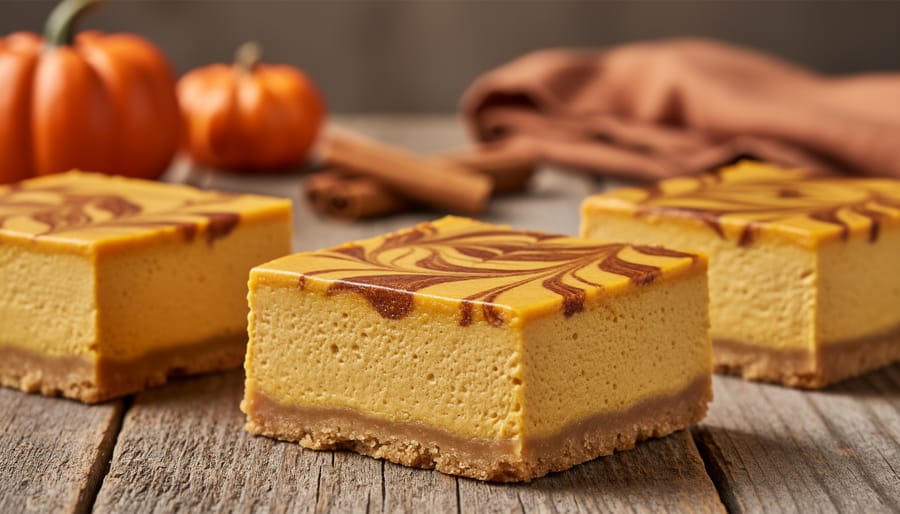
Starting with pureed butternut squash in cheesecake bars might sound unconventional, but this dessert bridges the gap between nutritious ingredients and indulgent treats. The squash provides a velvety, smooth base that’s remarkably similar to pumpkin in both texture and subtle sweetness, while adding vitamins A and C along with fiber. When you blend roasted butternut squash into cream cheese filling, it creates an impossibly creamy consistency without extra fat or heavy cream. The natural starches in the squash help stabilize the custard, reducing the risk of cracks and ensuring a perfect slice every time.
The maple swirl technique elevates these bars from simple to stunning. After pouring the squash-cream cheese mixture over a graham cracker or oat crust, drizzle pure maple syrup across the surface in parallel lines. Use a toothpick or knife to drag perpendicular strokes through the lines, creating an elegant marbled pattern that looks bakery-worthy. As the bars bake at a low temperature (around 325°F), the maple syrup caramelizes slightly at the edges while maintaining its liquid amber color through the swirls.
The pairing works on a flavor level too. Butternut squash has an earthy, nutty quality that complements maple’s caramel notes without competing. Unlike refined sugar, maple syrup brings mineral complexity and a hint of smokiness that makes each bite more interesting. These bars satisfy sweet cravings while sneaking in vegetables, making them a smarter choice for family desserts or holiday gatherings. Serve them chilled with a dollop of whipped cream, and guests will never guess they’re eating squash. For more maple ideas in unexpected dishes, the combination of artisanal sweeteners with seasonal produce opens endless creative possibilities in your kitchen.
Frequently Asked Questions
How do I easily peel and cut butternut squash?
Start by cutting off both ends, then stand the squash upright and slice down the sides with a sharp vegetable peeler or knife to remove the skin. Cut the squash in half lengthwise, scoop out the seeds, then cut into your desired shape, cubes for roasting, slices for stuffing, or chunks for soup.
Can I freeze cooked butternut squash?
Yes, cooked butternut squash freezes beautifully for up to three months. Let it cool completely, then store in airtight containers or freezer bags, removing as much air as possible. Roasted cubes and pureed squash both freeze well, making them perfect for meal prep.
What’s the difference between roasting and steaming butternut squash?
Roasting caramelizes the natural sugars and creates golden-brown edges with concentrated flavor, while steaming produces softer, more neutral-tasting squash that works well for purees and soups. Roasting takes longer but delivers richer taste, whereas steaming is faster and preserves more moisture.
How long does butternut squash last?
Whole, uncut butternut squash keeps for two to three months in a cool, dark place with good air circulation. Once cut, wrap the pieces tightly in plastic wrap and refrigerate for up to five days, or freeze them for longer storage.
These practical tips help you get the most from butternut squash in all the recipes we’ve shared. Whether you’re meal-prepping roasted cubes for the week or making a big batch of soup to freeze, proper preparation and storage ensure you always have this versatile ingredient ready. The beauty of butternut squash lies in its forgiving nature, it adapts to various cooking methods and pairs naturally with maple syrup’s subtle sweetness across savory and sweet dishes alike.
These eight recipes prove that butternut squash deserves a permanent spot in your kitchen rotation. From the simplicity of maple-glazed roasted squash to the elegance of sage risotto, and even the surprise of butternut squash cheesecake bars, this versatile ingredient adapts to whatever your family craves.
The real magic happens when you pair butternut squash with natural sweeteners like maple syrup. That combination brings out the squash’s natural sweetness while adding depth and complexity you won’t get from refined sugar. Whether you’re drizzling maple over roasted cubes or swirling it into dessert, you’re working with two artisanal ingredients that complement each other perfectly.
These aren’t just seasonal dishes, either. Butternut squash keeps well and remains available year-round, making these recipes practical for any month. They’re healthy comfort food that actually comforts, whether you’re meal-prepping soup for busy weeks or impressing guests with stuffed squash halves.
Ready to explore more? Try these same techniques with acorn squash, kabocha, or spaghetti squash. Each variety brings its own texture and flavor profile, opening up even more possibilities for creative cooking with quality, natural ingredients.