
Properly stored maple syrup lasts at least a year in the refrigerator once opened, indefinitely in the freezer, and over a year unopened in the pantry. The key is protecting this natural sweetener from three enemies: heat, light, and air exposure. Unlike honey, which resists spoilage through sheer chemistry, maple syrup’s high water content (around 33%) makes it vulnerable to mold if stored incorrectly, but with the right approach, you can preserve every drop of that amber goodness you tapped from the trees or brought home from the farmers market.
The science behind maple syrup storage is straightforward. Sugar concentration creates an environment that slows bacterial growth, but it’s not enough to prevent mold spores from taking hold once you break that seal. Temperature control becomes your primary tool. Commercial producers heat-seal their containers after filling, creating a sterile environment that requires no refrigeration until you twist that cap for the first time. After opening, though, the game changes completely.
Whether you’re a backyard sugar maker finishing your own batches or a home cook keeping a special Vermont reserve on hand, understanding how different storage methods affect shelf life lets you enjoy pure maple flavor year-round. The method you choose depends on how quickly you’ll use it, how much space you have, and whether you’re dealing with glass, plastic, or metal containers.
What You’ll Need for Proper Maple Syrup Storage
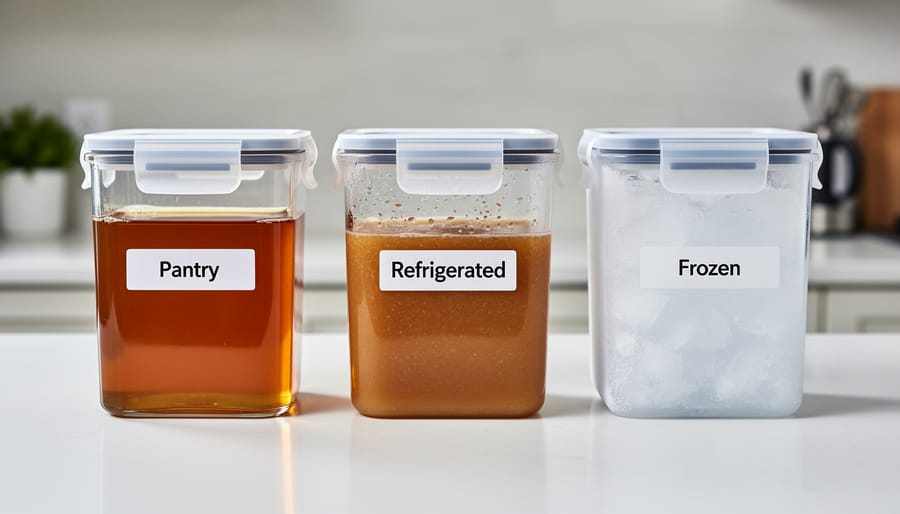
You don’t need much to store maple syrup properly, but having the right containers makes all the difference in keeping your syrup fresh and preventing spills or contamination. Before you transfer that precious bottle from the store or finish your homemade batch, gather these basic supplies.
Essential Storage Materials
- Glass jars with tight-fitting lids, Best for refrigerator storage and reheating crystallized syrup
- Food-grade plastic containers with secure caps, Convenient for pantry storage of unopened syrup
- Freezer-safe containers or jars, Must have headspace for expansion; ideal for long-term preservation
- Adhesive labels and permanent markers, Critical for dating opened containers and identifying infused varieties
- Clean dish towels or paper towels, For wiping jar rims before sealing
- Funnel, Makes transferring syrup mess-free, especially with narrow-mouth jars
The containers you choose depend on your storage method. Glass works everywhere and won’t absorb flavors, but it can crack in the freezer if filled too full. Plastic containers are lighter and safer for freezing, though they can retain odors over time if you’re storing flavored syrups.
Optional Equipment for Serious Storage
If you’re canning homemade syrup or storing large quantities, you’ll want a few additional tools. A water bath canner or large stockpot handles the sterilization process for shelf-stable storage. Canning jars with two-piece lids create proper seals that last months in the pantry. A candy thermometer helps you hit the right temperature (180°F) for hot-pack canning, while jar lifters and tongs make handling hot containers safer.
Keep everything spotlessly clean before you start. Contamination is the enemy of good maple syrup storage, so wash and dry all containers thoroughly.
Important Safety and Quality Warnings
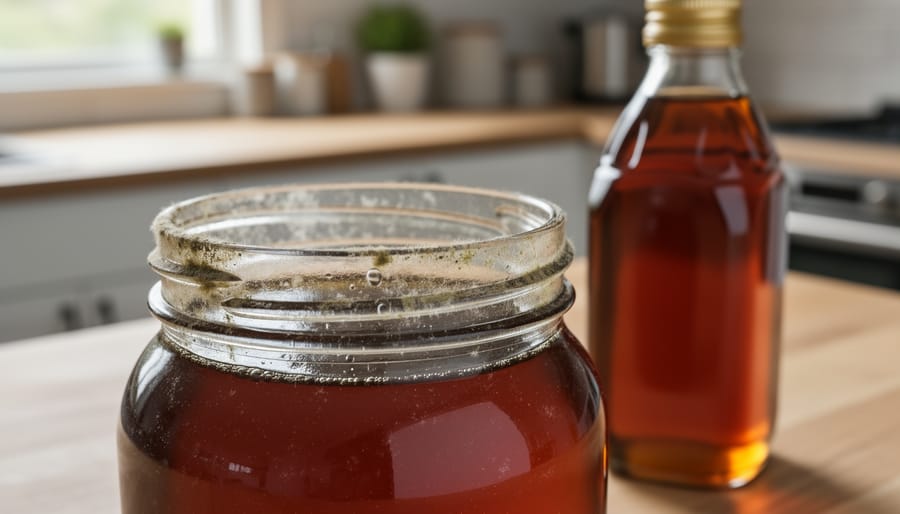
Before you start storing your maple syrup, there are a few important things you need to watch for. Understanding these potential issues now will help you keep your syrup safe and delicious for months to come.
The most serious concern is mold. If you see fuzzy growth on the surface of your syrup, especially near the edges or floating on top, that’s mold. It typically appears grayish-white or greenish and looks like tiny cotton balls. Some folks from the old school might tell you to just skim it off and boil the syrup, but food safety experts recommend a different approach for home kitchens.
Now, here’s something that confuses a lot of people: crystallization is not spoilage. If you notice sugar crystals forming at the bottom of your container or a grainy texture developing, your syrup hasn’t gone bad. This happens naturally when the sugar concentration shifts or when syrup gets too cold. You can fix crystallized syrup by gently warming it in a pot of hot water until the crystals dissolve. It’s completely safe to eat and tastes exactly the same.
Clean containers are non-negotiable. Any residue, moisture, or food particles in your storage jar can introduce bacteria or yeast that will spoil your syrup quickly. Always wash containers with hot, soapy water and let them dry completely before transferring syrup. If you’re canning homemade syrup, sterilize those jars properly.
Avoid storing maple syrup in metal containers for extended periods. Metal can react with the natural acids in syrup, affecting both flavor and safety. Stick with glass or food-grade plastic for storage.
Temperature swings are your enemy. Moving syrup repeatedly from warm to cold environments creates condensation inside the container, which introduces moisture that can encourage mold growth. Pick a storage spot and stick with it.
Step-by-Step Maple Syrup Storage Methods
Storing Unopened Maple Syrup
Unopened maple syrup is remarkably shelf-stable and thrives in basic pantry conditions. Start by choosing a storage spot away from your stove, dishwasher, or any appliances that generate heat. A cabinet or shelf on an interior wall works better than one adjacent to an exterior wall where temperatures fluctuate with the weather.
Check the container for the expiration or best-by date printed on the label. Commercial maple syrup typically stays fresh for two to four years when sealed, though many producers include conservative dating. Write the purchase date on the container if you want to track how long it’s been in storage.
Aim for temperatures between 50 and 70 degrees Fahrenheit. Your typical kitchen pantry usually falls within this range naturally. Darkness matters more than you might expect. Direct sunlight degrades the syrup’s color and flavor over time, even through amber glass or plastic bottles. If your storage area has a window, position the syrup behind other items or choose a different cabinet.
The container itself needs no special preparation. Leave it sealed exactly as purchased. Resist the urge to transfer unopened syrup into different jars. The original packaging keeps air out and maintains the sterile environment created during bottling.
Shelf life remains consistent regardless of syrup grade. Dark, robust varieties store just as long as golden, delicate ones. Check your pantry every few months to ensure the storage conditions haven’t changed and the container remains undamaged.
Storing Opened Maple Syrup in the Refrigerator
Once you break the seal on your maple syrup container, the clock starts ticking on refrigeration. The sugar-loving yeasts and molds that were held at bay by the factory seal now have access to your syrup, and room temperature becomes an invitation for spoilage. Refrigeration slows microbial growth dramatically and keeps your syrup tasting fresh for up to a year.
- Inspect your current container for an airtight seal. If the original bottle has a good screw cap or flip-top that closes completely, you can keep using it. Glass and food-grade plastic both work well.
- Transfer the syrup to a clean glass jar with a tight-fitting lid if the original container has a flimsy cap or won’t seal properly. Mason jars are excellent choices.
- Wipe the rim and threads of the container clean before sealing. Sticky residue on the lid creates gaps where air sneaks in.
- Write the opening date on a piece of masking tape or a label and stick it on the container. This takes five seconds and saves you from guessing games six months later.
- Place the sealed container on a middle or lower shelf in the main body of your refrigerator, not in the door. Door storage exposes your syrup to temperature swings every time someone grabs the milk.
Your refrigerator should stay between 35-40°F for optimal preservation. At this temperature range, opened pure maple syrup maintains its flavor, color, and consistency for a full year. The cold doesn’t stop crystallization, which is a natural process as sugars settle out of solution, but it does prevent the fuzzy mold growth that ruins syrup stored at room temperature.
Check your syrup periodically for any surface changes. Clear, amber liquid with that characteristic maple aroma means you’re doing everything right.
Freezing Maple Syrup for Long-Term Storage
Freezing maple syrup gives you nearly indefinite storage while preserving its rich flavor and quality. The process is straightforward, but you’ll need to account for the syrup’s unique freezing properties.
Start by selecting proper freezer-safe containers. Glass jars work well, but leave at least 2 inches of headspace at the top. Pure maple syrup expands slightly as it cools, and while it won’t freeze completely solid, you still need room to prevent container stress. Heavy-duty plastic containers with airtight seals are another reliable option, especially for larger quantities.
Consider portioning your syrup before freezing. Instead of freezing a full gallon, divide it into smaller containers holding one or two cups each. This way, you only thaw what you need for the week and avoid repeated freeze-thaw cycles that can degrade quality over time. Ice cube trays also work brilliantly for creating syrup portions perfect for single servings.
Label each container with the current date and the grade of syrup. Frozen maple syrup stays fresh for years, but tracking when you stored it helps with rotation if you build up a collection.
Set your freezer to 0°F or below for optimal storage. The syrup will become thick and viscous rather than frozen solid because its high sugar content lowers the freezing point. This means it pours slowly straight from the freezer.
When you’re ready to use it, thaw frozen syrup overnight in the refrigerator. For faster results, place the sealed container in a bowl of cool water. Never microwave it directly, as uneven heating can create hot spots and alter the delicate flavor compounds. Once thawed, store it in the refrigerator and use within a year.
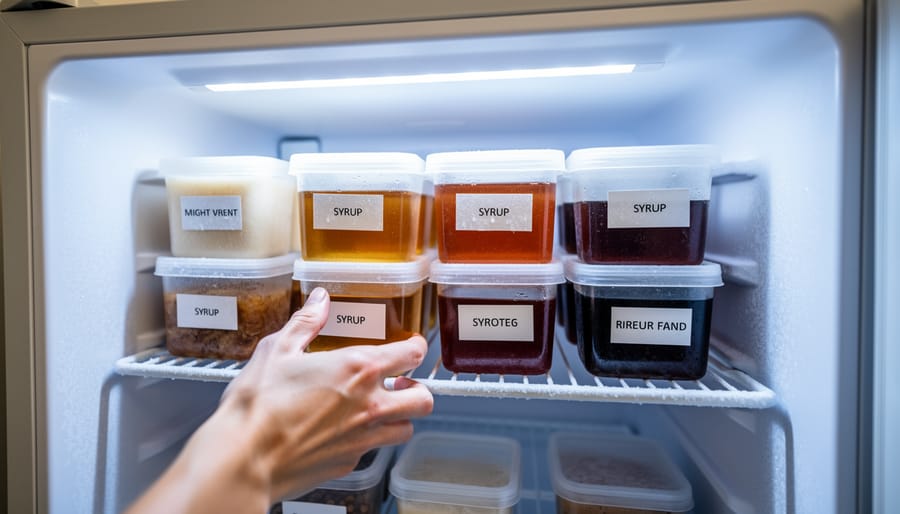
Sterilizing and Canning for Homemade Maple Syrup
If you’re tapping your own trees and boiling down sap, you’ll want to preserve that hard-earned syrup properly. The hot-pack canning method creates shelf-stable storage that keeps your homemade batch fresh for a year or more without refrigeration.
Start by washing your canning jars, lids, and bands in hot soapy water, then place the jars in a large pot of water. Bring it to a simmer and keep them hot until you’re ready to fill, this prevents cracking when hot syrup hits the glass. Keep lids in a separate bowl of hot (not boiling) water to soften the sealing compound.
While your jars heat, warm your finished maple syrup to 180°F. Use a candy thermometer to verify the temperature. This heat level kills any microorganisms and ensures proper sealing without overcooking the syrup.
Remove one hot jar at a time using jar lifters. Pour the 180°F syrup directly into each jar, leaving a quarter-inch of headspace at the top. Wipe the rim clean with a damp cloth, any syrup residue will prevent sealing. Center a hot lid on top and screw the band on fingertip-tight.
Process the filled jars in a boiling water bath for ten minutes (add one minute for every 1,000 feet above sea level). The water should cover the jar tops by at least an inch. After processing, let jars cool undisturbed for 12 to 24 hours. You’ll hear the satisfying “ping” as each lid seals. Press the center of each lid to verify, it shouldn’t flex. Sealed jars stay good in your pantry for 12 months.
How to Tell If Your Storage Method Is Working
Good maple syrup can last for years when stored correctly, but you’ll want to check it periodically to catch any issues early. Your senses are the best tools for verifying freshness.
Start with a visual inspection every few months. Pour a small amount into a clear glass and hold it up to the light. Fresh maple syrup should be translucent with a color ranging from golden amber to deep brown, depending on the grade. If you spot fuzzy growth on the surface or floating particles that weren’t there before, that’s mold and the syrup needs to be discarded. Don’t try to scoop it off and save the rest.
Next, give it a smell. Pure maple syrup has a distinctive sweet, slightly woody aroma that shouldn’t change much over time. Any sour, fermented, or off odors mean the syrup has gone bad. Finally, taste a small spoonful. It should taste clean and sweet without any tanginess or alcohol notes that would indicate fermentation.
Here’s what to look for during your quality checks:
- Clear and translucent appearance (good sign)
- Sweet, woody aroma (good sign)
- Sandy crystals at the bottom (normal, fixable)
- Fuzzy surface growth (discard immediately)
- Sour or fermented smell (discard immediately)
Crystallization is the one issue that looks alarming but isn’t actually a problem. Those sandy, sugary crystals form when some of the sugar separates from the liquid, especially in syrup that’s been stored for a while. To fix it, place your container in a pot of warm water over low heat and stir gently until the crystals dissolve. Never microwave syrup in a metal container, and be patient with the heating process to avoid scorching the sugars.
Special Considerations for Infused Maple Syrups
Infused maple syrups need more careful handling than pure syrup because the added ingredients change how the product behaves. Cannabis-infused varieties, vanilla-infused syrup, and even tea maple syrup should go straight into the refrigerator, even if the container hasn’t been opened yet. The herbs, oils, or plant compounds in these products break down faster than pure maple syrup, and refrigeration slows that degradation.
Expect a shorter shelf life with any infused syrup. While pure maple syrup lasts up to a year in the fridge after opening, infused versions typically stay fresh for three to six months, depending on what’s been added. Cannabis-infused products often carry the shortest window because the cannabinoids degrade over time, losing potency even when properly stored.
Label every container with the infusion type, creation date, and dosage information if applicable. For cannabis products, include THC or CBD content per serving so you maintain consistent dosing. Understanding how it works helps you monitor quality and potency.
Additional ingredients like herbs, spices, or fruit also introduce moisture and organic matter that mold finds appealing. Check infused syrups weekly for any signs of spoilage, cloudiness, or off smells. If you’re experimenting with infused maple alternatives keep detailed notes about what you added and how long each batch stayed fresh, which helps you refine your storage approach over time.
Common Maple Syrup Storage Questions
Let’s clear up the confusion around maple syrup storage with answers to the questions families ask most often. These come up repeatedly in our community of syrup enthusiasts, whether you’re storing your own homemade batch or that beautiful bottle from the farmers market.
Can maple syrup go bad?
Yes, opened maple syrup can spoil if contaminated or stored improperly, though unopened syrup lasts indefinitely when kept in a cool, dark place. The main culprits are mold growth and fermentation from improper storage.
Does maple syrup need refrigeration?
Once opened, pure maple syrup should be refrigerated to prevent mold and fermentation. Unopened containers can stay in the pantry, and all infused varieties need refrigeration regardless of whether they’ve been opened.
What’s the white or fuzzy stuff on top of my syrup?
That’s mold, which can grow on maple syrup exposed to air or stored in warm conditions. While some people scrape it off and reboil the syrup, it’s safer to discard the entire container if you see mold growth.
Can you freeze maple syrup in glass jars?
Yes, but leave at least two inches of headspace because the syrup expands slightly even though it won’t freeze solid. Use freezer-safe glass jars and avoid temperature shocks by letting frozen syrup thaw gradually in the refrigerator.
The shelf life question deserves special attention since it varies significantly. Commercial maple syrup typically lasts 12 months in the refrigerator after opening, while homemade syrup has a similar timeline if properly canned and sealed. Unopened commercial syrup stays good for years past its printed date when stored correctly, but homemade syrup should be used within two years even when sealed.
Crystallization confuses people, but it’s completely normal and doesn’t mean your syrup has spoiled. Sugar naturally crystallizes over time, especially in cold storage. Fix it by placing the container in a pan of warm water and gently heating until the crystals dissolve, or microwave small amounts in short bursts.
Cloudy syrup usually signals either crystallization beginning or sediment settling from homemade batches, both harmless. However, if cloudiness comes with off smells, foam, or a fermented taste, that indicates spoilage and you should toss it. Trust your senses: fresh maple syrup looks clear amber, smells sweet and woody, and tastes clean without any sour or alcoholic notes.
Storing maple syrup properly comes down to one straightforward principle: keep unopened bottles in your pantry, transfer opened containers to the refrigerator, and use the freezer when you need extended preservation. These simple habits protect the quality and flavor you expect from this artisanal sweetener, whether you’ve purchased a premium bottle or tapped your own backyard sugar maples.
Now that you understand the storage essentials, you’re well-equipped to experiment with the full potential of this natural ingredient. Consider making your own maple syrup during the next sugaring season, or try your hand at cannabis-infused varieties for a unique twist on traditional recipes. The satisfaction of producing and preserving your own syrup connects you to generations of craft and tradition. Whether you’re drizzling it over pancakes, using maple syrup in savory dishes, or creating custom infusions, proper storage ensures every drop maintains its rich, complex sweetness for months to come. The care you put into preserving this ingredient reflects the same dedication that goes into producing it.