
Tea maple syrup is maple syrup infused with tea leaves, herbs, or botanicals to create a sweetener that delivers both the rich sweetness of pure syrup and the distinct flavor profile of your chosen tea. This craft technique transforms traditional maple syrup into a versatile ingredient that brings complexity to everything from morning lattes to cocktails, giving you a two-in-one ingredient that sweetens and flavors simultaneously.
The appeal is simple: instead of adding both sweetener and flavor to your drink separately, tea maple syrup does both jobs at once. A chai-infused maple syrup instantly creates a spiced latte when mixed with steamed milk. An Earl Grey version adds floral bergamot notes to iced tea or lemonade. Green tea maple syrup brings grassy, delicate flavors to sparkling water or kombucha.
This article breaks down exactly how the infusion process works, why certain teas pair better with maple’s natural caramel notes, and the specific temperature and timing that preserve both the syrup’s texture and the tea’s aromatics. You’ll learn which tea categories produce the best results, from black and herbal to floral and spiced varieties, plus how to match syrup grades to different tea intensities. We’ll also cover practical applications for hot and cold beverages, baking adaptations, and a straightforward DIY method for making small batches at home with equipment you already own.
What Tea Maple Syrup Really Means
Tea maple syrup is pure maple syrup infused with tea leaves or tea extracts, creating a sweetener that carries both the rich, caramel notes of maple and the distinct flavors of the chosen tea. Think of it as a marriage between two natural ingredients: the concentrated sap from sugar maple trees and the aromatic compounds from tea leaves, resulting in a hybrid sweetener that does more than just add sweetness to your drink.
Unlike plain maple syrup, which offers a single flavor dimension, tea maple syrup brings layered complexity. Regular maple syrup tastes like maple. Tea maple syrup tastes like maple plus bergamot, or maple plus jasmine, or maple plus chai spices, depending on which tea was used in the infusion. This dual-flavor approach makes it particularly valuable for beverage creation, where you can sweeten and flavor simultaneously instead of adding multiple ingredients.
- Tea Maple Syrup
- A natural sweetener created by steeping tea leaves in pure maple syrup, combining the sweetness and minerals of maple with the aromatic compounds and antioxidants of tea.
- Infusion Process
- The method of introducing tea flavors into maple syrup by steeping tea leaves in warmed syrup or cold-steeping over extended periods, allowing flavor compounds to dissolve into the liquid.
- Flavor Profiles
- The distinct taste characteristics that result from different tea-maple combinations, ranging from floral and delicate (white tea) to bold and malty (black tea) to earthy and grassy (green tea).
- Beverage Sweetener
- A liquid ingredient used to add sweetness to drinks while also contributing additional flavor dimensions, replacing or enhancing traditional simple syrups in coffee shops, bars, and home kitchens.
The growing popularity among mixologists and beverage enthusiasts stems from efficiency and creativity. Why use plain simple syrup when you can build flavor depth with a single pour? Craft cocktail bars use Earl Grey maple syrup to add both sweetness and citrus notes to whiskey sours. Coffee shops reach for chai-infused maple to create signature lattes without needing separate spice syrups. Home beverage makers appreciate the ability to elevate everyday drinks without cluttering their pantries with multiple bottles.
How Tea Maple Syrup Works in Beverages
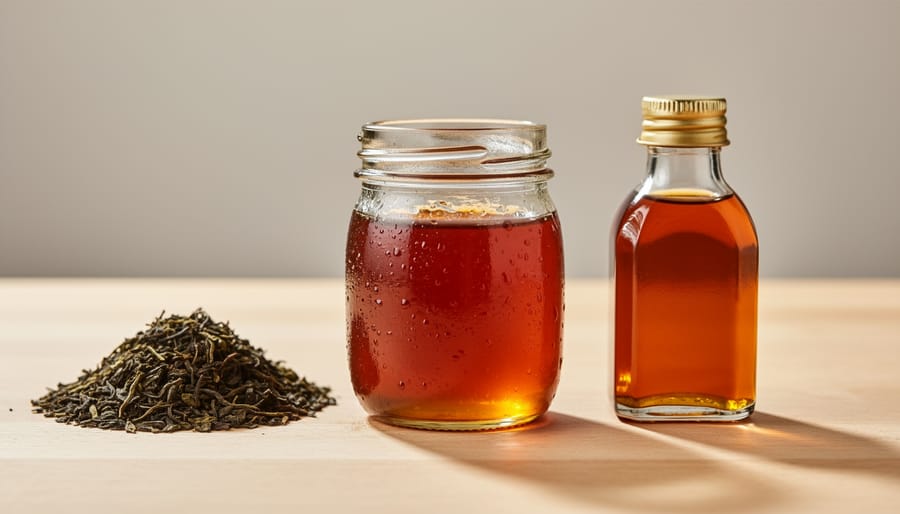
Tea maple syrup works differently than plain sugar or even straight maple syrup because you’re getting a two-part chemical interaction. When tea steeps in maple syrup, compounds like tannins, polyphenols, and essential oils from the tea leaves bond with the syrup’s natural sugars, primarily sucrose, glucose, and fructose. These tea molecules don’t just float around; they actually attach to the sugar molecules through a process called molecular binding, creating flavor complexes that release gradually as the syrup dissolves in your drink.
The syrup’s liquid form gives it a major advantage in beverages. Unlike granular sugar that needs vigorous stirring to dissolve, tea maple syrup disperses almost instantly when you pour it into any drink. This happens because the syrup is already in solution, the sugar molecules are suspended in water alongside maple’s trace minerals (manganese, zinc, calcium) and the infused tea compounds. You’re essentially adding pre-dissolved sweetness that integrates on contact rather than settling at the bottom of your glass.
Temperature plays a crucial role in how those flavors express themselves. In hot beverages like coffee or chai, heat speeds up molecular movement, causing the tea compounds to release quickly and intensely. You’ll notice more pronounced tannins from black tea varieties or sharper herbal notes from mint-infused syrups. The warmth also volatilizes aromatic compounds, those fleeting scent molecules that give tea its character, so they reach your nose before the first sip.
Cold beverages tell a different story. Lower temperatures slow down flavor release, creating a more subtle, layered experience. The same Earl Grey maple syrup that tastes bold in hot tea becomes gently floral in iced coffee, with bergamot notes unfolding gradually rather than hitting all at once. This makes tea maple syrup particularly versatile for cold brew, smoothies, and cocktails where you want sweetness without overwhelming delicate flavors. The syrup’s viscosity also helps it cling to ice cubes slightly, preventing the immediate dilution you get with simple syrup.
Different Types of Tea Maple Syrup
The world of tea maple syrup extends far beyond a single flavor profile. Each tea variety brings its own character to the maple base, creating distinct sweeteners tailored to different beverage applications.
Black tea infusions produce the most robust versions. Earl Grey maple syrup combines bergamot’s citrus brightness with maple’s caramel notes, making it exceptional in London Fog lattes and bourbon cocktails. The bergamot oil cuts through cream beautifully while the maple rounds out any bitterness. English Breakfast maple delivers malty depth that pairs naturally with milk-based drinks like cappuccinos and chai lattes. This combination amplifies the toasted, bread-like notes many coffee drinkers love, while adding complexity plain sugar cannot match.
Green tea varieties create lighter, more delicate syrups. Matcha-infused maple syrup brings grassy, umami undertones with a subtle vegetal sweetness perfect for iced lattes and green smoothies. The chlorophyll compounds in matcha blend seamlessly with maple’s mineral content, producing an earthy complexity without bitterness. Sencha maple offers a cleaner, more refreshing profile with hints of seaweed and grass that works exceptionally well in sparkling water and vodka-based cocktails. These green tea versions typically require gentler infusion to avoid harsh tannins.
Herbal tea blends open up the flavor spectrum considerably. Chamomile maple creates a honey-like, floral syrup ideal for bedtime drinks, herbal teas, and gin cocktails where its apple-like notes complement botanical spirits. Hibiscus maple develops a tart, cranberry-forward character with deep ruby color, transforming lemonades, tequila drinks, and iced teas into visually stunning beverages with a sweet-tart balance. The natural acidity from hibiscus means you can use less lemon or lime in recipes.
Specialty blends push creative boundaries further. Rooibos maple brings vanilla and honey notes perfect for autumn drinks. Jasmine maple adds perfumed sweetness to champagne cocktails and white teas. Some artisans create seasonal combinations like peppermint maple for winter beverages or peach tea maple for summer refreshers.
The key is matching the tea’s intensity to your beverage. Delicate drinks need subtle green or white tea infusions, while bold coffee drinks and dark spirits can handle assertive black tea or spiced chai versions.
Where and How to Use Tea Maple Syrup
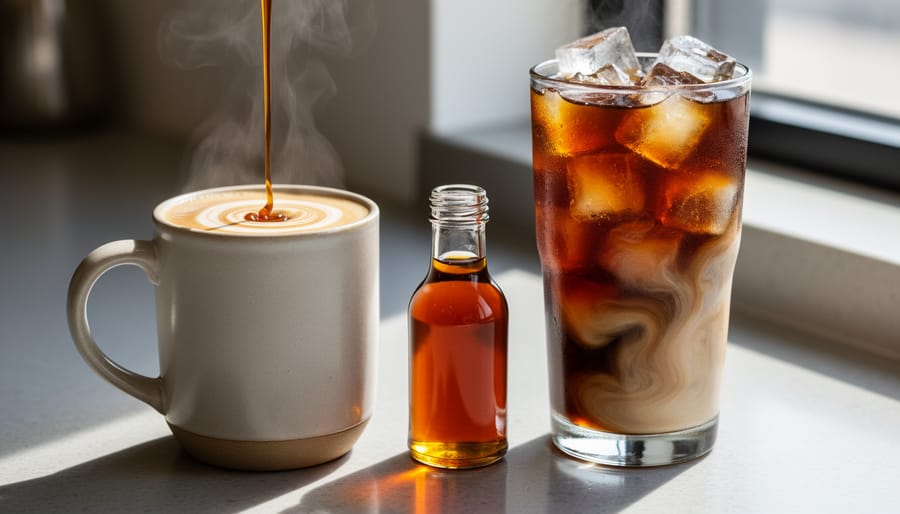
Tea maple syrup transforms everyday drinks into something special, but knowing exactly how much to use makes all the difference. A good rule of thumb: start with one tablespoon per eight-ounce beverage and adjust from there. Your tea maple syrup already brings sweetness plus flavor complexity, so you’ll typically need less than you’d use of plain syrup.
For coffee drinks, tea maple syrup shines in lattes and cold brew. A black tea-infused maple adds depth to espresso-based drinks without overwhelming the coffee notes, while Earl Grey maple creates a naturally flavored latte that needs no additional vanilla. Stir it into hot coffee or shake it with cold brew and ice, either way, it dissolves smoothly and adds a silky texture.
Tea lattes get a flavor boost when you swap plain sweetener for tea maple syrup. Use a chamomile maple in a London Fog, or try matcha maple in regular black tea for an unexpected twist. The key is matching tea types: don’t fight green tea’s delicate profile with a bold English Breakfast maple, but do pair complementary flavors like jasmine tea with a light green tea maple.
Here are some quick applications to try:
- Cocktails and mocktails: Use hibiscus maple in gin fizzes or bourbon sours (1-1.5 tablespoons per drink)
- Smoothies: Blend in chamomile or green tea maple for sweetness without overpowering fruit (start with 2 teaspoons)
- Sparkling water: Add half a tablespoon to plain seltzer with a squeeze of citrus for homemade soda
- Iced tea: Sweeten pitchers with 3-4 tablespoons per quart, adjusting to taste
- Seasonal drinks: Stir Earl Grey maple into hot apple cider or use black tea maple in pumpkin spice lattes
When balancing flavors, think about intensity. Bold beverages like dark roast coffee can handle stronger tea maples, while delicate drinks need lighter infusions. If you’re adding citrus, cream, or spices to your drink, reduce the tea maple syrup slightly, those ingredients amplify sweetness perception. Always taste as you go; you can add more, but you can’t take it back.
Making Your Own Tea Maple Syrup at Home
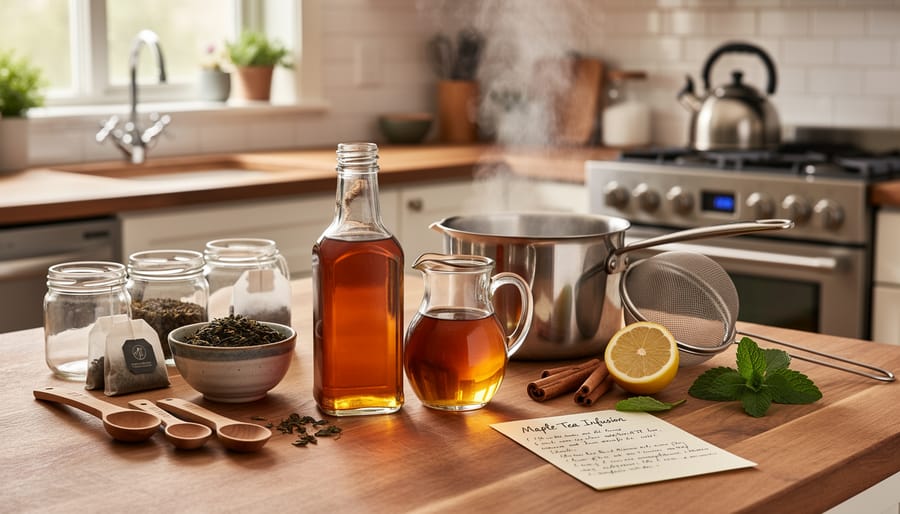
Making your own tea maple syrup transforms a simple pantry ingredient into something genuinely special. Start with pure maple syrup, Grade A Amber or Dark works beautifully, offering rich flavor without overpowering the tea. For the tea itself, use loose-leaf varieties when possible. They release more essential oils and flavor compounds than bagged versions, creating deeper infusion.
The hot infusion method works fastest. Gently warm one cup of maple syrup in a small saucepan over low heat until it reaches about 160°F. Remove from heat and add two to three tablespoons of loose tea or three to four tea bags. Let it steep for 15 to 20 minutes, tasting at intervals. Black teas and robust herbals need the full time, while delicate green teas may only need 10 minutes to avoid bitterness. Earl Grey creates a gorgeous bergamot-citrus profile, while chamomile adds floral honey notes.
Cold infusion takes longer but preserves more subtle flavors. Combine maple syrup and tea in a clean jar, seal it, and refrigerate for 24 to 48 hours. This method works exceptionally well with green teas and herbal blends that can turn astringent when heated.
Strain the finished syrup through a fine-mesh strainer or cheesecloth, pressing gently to extract every drop. Pour into a sterilized glass bottle or jar. Your tea maple syrup will keep for three to four weeks refrigerated. The process invites experimentation, try combining chai spices with maple for fall drinks, or mint tea for refreshing summer beverages. Kids can help select tea flavors and watch the infusion darken, making it a hands-on kitchen project that yields delicious results.
Health Benefits and Considerations
Tea maple syrup brings together two naturally nutrient-rich ingredients, creating a sweetener that does more than just add flavor to your drinks.
Pure maple syrup contains manganese and zinc, minerals that support immune function and metabolic health. When you infuse it with tea, you’re layering in additional antioxidants like polyphenols from black and green teas, or calming compounds like apigenin from chamomile. These antioxidants help combat oxidative stress in the body, though the concentration depends on the tea type and steeping strength you choose.
Compared to refined white sugar, tea maple syrup offers these trace minerals and plant compounds. Artificial syrups typically contain high-fructose corn syrup, artificial flavors, and preservatives that tea maple syrup avoids entirely. The glycemic index of pure maple syrup sits around 54, lower than table sugar’s 65, meaning it causes a gentler rise in blood sugar.
That said, maple syrup is still a concentrated sugar source. A tablespoon contains roughly 12 grams of sugar and 52 calories. For beverages, start with one teaspoon and adjust to taste rather than pouring freely. This approach keeps your drinks flavorful without excessive sweetness.
If you’re managing diabetes, monitor your blood sugar response and account for the carbohydrate content. Those following low-sugar or ketogenic diets should use tea maple syrup sparingly. The good news: its intense flavor means a little goes further than plain sugar would.
Common Questions About Tea Maple Syrup
Does tea maple syrup need to be refrigerated?
Yes, always store tea-infused maple syrup in the refrigerator once you’ve opened it or made it at home. The tea compounds can introduce additional moisture and organic matter, making it slightly more perishable than plain maple syrup, though it’ll still last 3-4 months when refrigerated in an airtight container.
Does it work equally well in hot and cold drinks?
Tea maple syrup dissolves beautifully in hot beverages and blends into cold drinks better than honey or plain maple syrup because the tea infusion slightly thins the consistency. For iced drinks, you might need to stir a bit more, but it won’t clump or settle like granulated sugar.
How much more expensive is it than regular maple syrup?
Commercial tea-infused maple syrups typically cost 30-50% more than plain Grade A maple syrup because of the additional processing and specialty ingredients. Making your own at home costs just pennies more per batch, basically the price of a few tea bags added to quality maple syrup you’d buy anyway.
Where can I buy it versus making my own?
Specialty food stores, farmers markets, and online retailers carry artisanal tea maple syrups, though selection varies by region. Making your own gives you complete control over flavor intensity and tea variety, takes minimal effort, and lets you experiment with combinations you won’t find commercially.
Most tea maple syrups develop their fullest flavor after resting for 24 hours in the fridge, which allows the tea compounds and maple sugars to marry. If your homemade batch tastes too subtle, you haven’t ruined it, just steep another round of tea leaves in the same syrup, strain, and let it rest again. The beauty of this sweetener is how forgiving it is when you’re dialing in your preferred strength.
Tea maple syrup opens up a world of beverage possibilities that go far beyond traditional sweetening. Whether you’re upgrading your morning coffee, crafting sophisticated cocktails, or simply adding depth to sparkling water, this fusion ingredient delivers both flavor complexity and natural goodness. The beauty lies in its flexibility, you can purchase artisan blends or experiment with your own infusions at home, adjusting tea varieties and steeping times to match your taste preferences.
As more people seek alternatives to refined sugars and artificial syrups, tea maple syrup represents the sweet spot between health-conscious choices and genuine flavor innovation. It transforms everyday drinks into something special while keeping ingredients simple and recognizable. Start with one basic infusion, see how it changes your favorite beverage, then let your creativity guide you toward new combinations and seasonal variations.